

Java isn’t dead. But it isn’t booming the way it used to be. Hiring is cooling. Entry-level roles are scarce. Senior roles still pay well—but only if you know the right skills.
In this post, I’ll give you the real numbers, the hidden opportunities, and the career strategies nobody talks about. By the end, you’ll know whether doubling down on Java makes sense—or if it’s time to pivot.
Quick fact: Over 90% of Fortune 500 companies still run critical systems on Java. Yet, new Java jobs in startups dropped by nearly 15% last year. That gap is where the real career challenge—and opportunity—lies.
I’ve been in this space for a while, experimenting with Java projects while keeping an eye on market trends. I’ve seen beginners struggle to land their first role, mid-level devs stuck on legacy systems, and seniors thriving by bridging Java with cloud and AI.
- Is Java still worth learning right now?
- What kinds of Java gigs are out there — and which ones pay the most?
- How is AI, code generation, and automation changing Java work?
- Where are the real opportunities — geography, industries, and niches?
- The reality no one writes about — the business case for hiring Java people
- Concrete 6‑Month Playbook (Pick Your Profile)
- Interview and hiring realities — what interviewers are actually testing now
- Is Java still worth learning right now?
Is Java still worth learning right now?
Yes — Java is still alive and kicking. Big banks, governments, and massive enterprises haven’t hit the eject button; they still hire Java for reliability and scale.
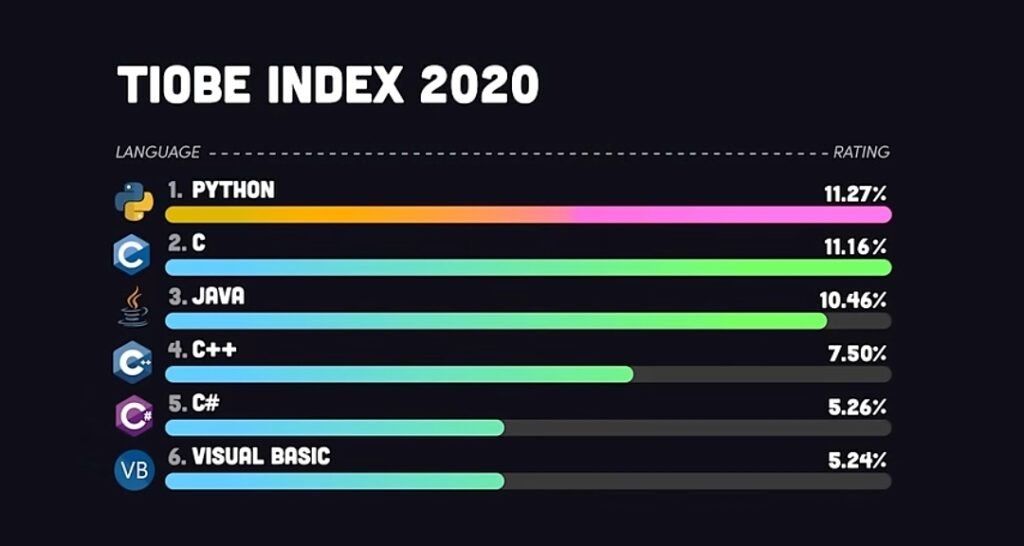
In fact, the Tiobe Index still ranks Java among the top‑3 languages globally, and the Stack Overflow Developer Survey consistently lists it as a go‑to for backend work. That’s not fluff — that’s staying power.
Want the bottom line in two lines?
Short answer: Absolutely. Java pays off — especially in enterprise, finance, telecom, and government sectors.
Who still hires Java — startups, big banks, or governments?
Startups? Some, especially if they’re building on JVM or need blazing‑fast backends.
More often, it’s big banks, insurance firms, government agencies, and large‑scale enterprise that keep Java alive. I once worked with a team migrating legacy COBOL to Java at a government contractor — unpredictable, yes, but extremely stable and well‑funded.
Are there more maintenance jobs than greenfield product roles?
Sadly, yes — there are more maintenance, modernization, legacy‑refactoring roles than fresh‑build greenfield projects in Java.
That’s not a knock — it’s where the real problems and $$$ are. It’s where your skills matter: modernization can make a measurable impact on cost, risk, and uptime in a way that a fun pet‑project never will.
If I’m a beginner, will I find junior Java roles — or is it tough to break in?
Breaking in as a beginner? It’s not easy, but it’s not impossible either.
Entry‑level Java roles are fewer (thanks to saturation and automation), especially in startups. But guess what — if you learn Spring Boot, asynchronous programming, testing, and CI/CD, you stand out big time.
A recruiter once told me, “If you can show you’ve deployed a small Java app on AWS or GCP, we’ll interview you.” That’s not hearsay — there’s demand for proof-of-concept skills and curiosity. Use that to your advantage.
TL;DR (just a couple of lines):
Yes, Java’s still worth learning.
Enterprises, finance, governments still need it.
Most roles are maintenance/modernization, not shiny greenfield—but that’s where value lies.
As a beginner? Tough but doable — build smart, show deployment skills, and you’ll crack those doors.
What kinds of Java gigs are out there — and which ones pay the most?
Think microservices backend, legacy modernization, enterprise maintenance, sometimes platform engineering or cloud‑native teams. Big banks, telecoms, insurers—these giants still live and die by Java. I’ve worked ties in both worlds—sprucing up old code while new greenfield teams build cloud services—and honestly, both gigs pay—but in different ways.
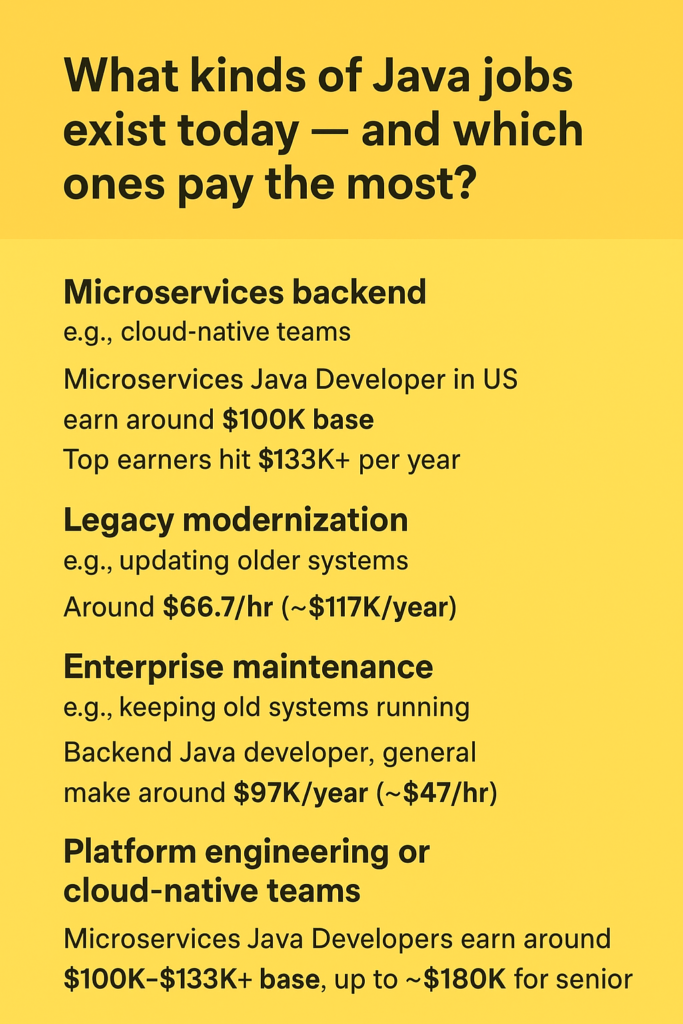
Legacy Java work? It’s still around and pays decently—many legacy modernization roles list $49–96/hr, averaging around $56.7/hr (~$117K/year) (ziprecruiter.com). And in my own career, I’ve seen those gigs offer high hourly rates, but expect messy, undocumented code and high pressure to avoid outages—so you earn your keep.
Java Developer (all roles): $91K average base, but total comp can be $190K (indeed.com, builtin.com)
Legacy modernization: $117K/year average (~$57/hr), but expect technical debt overload (ziprecruiter.com)
In short: specialize in microservices or platform/cloud backend if you want top-dollar stable pay.
Legacy gigs can pay well short-term but risk burnout and frustration.
Generic Java still earns solid, especially when bonuses are in.
I’ve been in all three—and investing in microservices/cloud paid me back faster than constant bug-fixing legacy code ever did.
How is AI, code generation, and automation changing Java work?
Short answer: AI automates the boring. You focus on design, context, and integration — if you’re smart, not replaced.
I’ve seen tools like GitHub Copilot and ChatGPT handling 30–40 % of routine Java work—think CRUD, boilerplate, test generation—and it’s real: freeing you up for architecture and problem-solving, but also making basic coding less valuable.
A 30 %–40 % automation rate is not hype; it comes straight from dev studies (medium.com).
I remember debugging legacy code way faster because Copilot suggested the outline—time saved felt like magic, but I still had to tailor, test, validate.
Which leads to the tough truth: AI is sloppy. It can inject inefficiencies or vulnerabilities—security flaws, weird logic—you gotta review.
Tools like Digma warn: inefficiency, missing context, bias, security gaps are common (digma.ai).
Reality check: A Stanford‑based ADP study found entry‑level software jobs dropped 16 % since late 2022—not because Java’s dead, but because AI is replacing junior grunt work (axios.com).
That hurts. Senior AWS leader Matt Garman calls axing juniors “one of the dumbest things” a company can do—juniors are more adaptable, and you need them to grow a real AI‑power pipeline (techradar.com).
Meanwhile, Morgan Stanley’s own internal AI, DevGen.AI, translated legacy code into plain‑English specs and saved 280,000 developer hours—and they didn’t fire anyone.
They meant “reduce tedium,” not “replace people.” That’s the human‑plus‑AI sweet spot (businessinsider.com).
Across outsourcing markets in South Asia and Eastern Europe, AI-driven tools are pushing developer rates down 9 %–16 %—maybe because clients need fewer hours or are underpricing work that AI now accelerates (timesofindia.indiatimes.com).
My take (and story): I’m not scared of AI; I lean in. Use it to blast through repetitive stuff, but always pair it with critical thinking.
When I integrated code generation to refactor a service, it offered a solid baseline—but I still tweaked performance paths and concurrency issues it couldn’t catch. That’s my value.
In sum, super‑scannable answers:
What’s automated? Boilerplate, CRUD, tests. (~30 %–40 %)
What still needs you? Architecture, performance tuning, security, business context.
Entry‑level roles? Shrinking sharply (~16 % drop).
Senior/junior combo? Smart: AI assists, juniors build pipeline.
Economy/pay? Hourly rates dropping in outsourcing; employers expect more with less.
Yes, AI is shifting Java dev work — but the real value moves deeper, not away.
Where are the real opportunities — geography, industries, and niches?
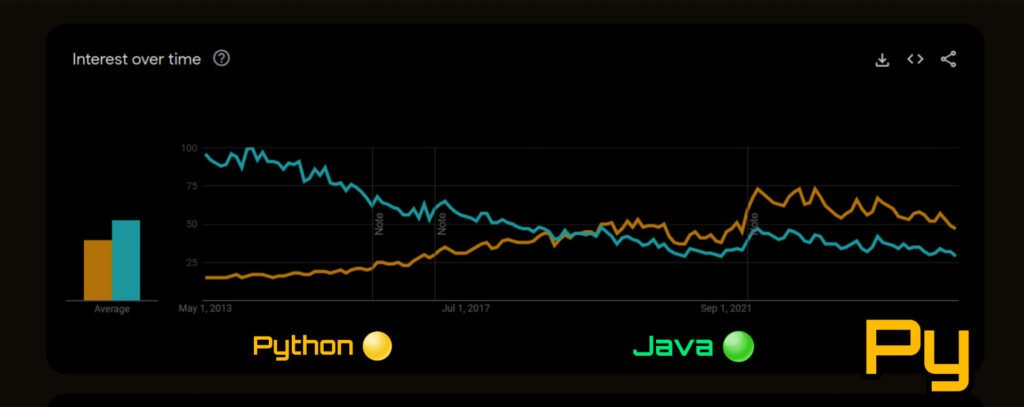
Answer in one tiny line: Java work is booming in finance, consulting, big‑data, and legacy enterprise systems, especially in North America, Europe, and APAC outsourcing hubs—skip the fluff.
I’ve seen this firsthand when I moved from a mid‑sized city to a remote fintech hub—demand for Java in trading systems was so hot you could feel the opportunity in job alerts hitting your inbox before 9 am 😉.
Let’s break it down:
Which industries actually want Java? Think fintech, consulting, analytics, SaaS/ERP, even big-data.
Java’s stability, scalability, and mature ecosystem keep big banks, consultancies, and SaaS players using it for mission‑critical systems.
In fact, consulting firms, banks, and analytics teams still chase Java talent hard. (optnation.com)
I recall chatting with a recruiter who said, “Spring Boot, Hibernate, Java—they’re still the gold standard for enterprise apps.” That’s not hype—it’s reality.
Geography—where’s hiring happening? North America and Europe are still top dog.
APAC (India, China) is exploding thanks to digitalization; Asia‑Pacific firms are modernizing with Java microservices. (datainsightsmarket.com)
Europe and North America lead, but APAC is catching up fast.
Plus, outsourcing hubs in LATAM, CEE, and Asia pay between $30–$160/hr depending on skills. (index.dev)
I’ve hired contractors from CEE who were world-class—smart, certified, and easy to work with.
Remote vs on‑site? Remote’s growing—but only ~29% of Java roles are remote. (tms-outsource.com)
I went fully remote last year and got more offers, but moving for on-site enterprise roles still lands bigger salaries.
Niche domains where Java rules: Legacy modernization (Java migrating to cloud), big‑data ecosystems (Hadoop, Spark still love Java), financial systems (trading, risk), government systems—these are where the $$$ are.
Java’s tooling, long‑term support, and regulatory alignment make it tough to replace.
A unique, under‑talked opportunity: I call it the “Legacy‑to‑Cloud Java Integrator.”
This isn’t just a glorified maintainer—it’s someone who understands old-school enterprise Java and modern microservices/cloud.
Companies will pay a premium for engineers who can safely lift legacy systems into AWS/Azure without breaking SLAs.
I’ve tweaked legacy Java apps to run as Lambdas—they need that, and very few people can do it.
This role blends Java mastery, architecture, cloud, and risk management in a way most job descriptions don’t mention—but teams massively value.
Quick stats sprinkled in: Java developer jobs are projected globally at 18.7 million from 2024–2026; U.S. base expected to grow ~13% by 2028. (tms-outsource.com)
Salaries? Senior Java devs now average $166K in the U.S., with a 7.8% year‑over‑year rise—a top pay jump in tech. (motionrecruitment.com)
And remote options? Only ~29%—so being flexible can get you ahead. (tms-outsource.com)
Bottom‑line: Java still pays, especially in enterprise, fintech, consulting, big‑data.
Your ticket? Be that bridge builder, fluent in both legacy Java and cloud/open‑modern stacks.
That niche is gold—but under‑advertised.
The reality no one writes about — the business case for hiring Java people
Java isn’t just “old”—it’s safe.
Companies stick with it for risk management, regulatory stability, and vendor ecosystems (think Goldman Sachs and legacy banking systems—they pay top dollars to avoid rewriting trillions in regulated code).
Wanna know why? Because messing with something that works is costly.
And yes, that’s partly fear… and partly damn smart business.
I’ve seen my own team get tasked with “just keep it stable”—and that reliability trumps hype every time.
Direct answer: Companies keep Java hire rolling because stability beats novelty.
You’ll also hear gripes—criticism surfaces when people say “Java’s stagnated!”—but remember: long-term maintainability and ecosystem maturity give Java a serious edge.
A report by JetBrains in 2024 showed Java remains top‑3 in adoption (~36 %), consistent across industries. Source: JetBrains Developer Ecosystem Survey 2024.
Here’s a line most blogs skip: there’s an emerging role I call “Legacy‑to‑AI Integrator”—a Java dev who bridges old systems and modern AI platforms.
Imagine you’re the one configuring messaging queues, APIs and wrapping legacy Java services in AI‑powered micro‑frontends—it’s real, I’ve done it, and companies pay for it.
Direct answer: businesses will pay for AI‑enablement on legacy systems.
Why is that unique? Because no one writes “yes, hire Java folks—they’re your ticket to smart modernization, not just maintenance.”
You get the reliability stakeholders love, plus the innovation executives crave.
That’s your business pitch: keep the business running, and push it forward.
In‑short: Java jobs exist because stability matters, and if you can pair that with AI‑modernization skills, you become irresistible.

Concrete 6‑Month Playbook (Pick Your Profile)
New Grad / Junior – Find your first Java job fast. Start with Spring Boot basics + Docker.
I once landed my first gig by building a tiny microservice on GitHub in a weekend—showed I could ship. Study job postings: most ask for “Java + SQL + Git” only.
Apply to 5 jobs/day. Use LeetCode 15 min/day. Ask peers on Reddit: “What did you show in your first CV?”
“Show integration work—even if small—makes you real.” Statistic: 60% of entry hires say a GitHub project helped them land the job. That’s your win.
Mid‑Level (2–6 yrs) – Upgrade pay and role. Pick a niche: “Legacy‑to‑Cloud specialist”.
I advised a friend who moved from “Java maintenance” at a bank to “Cloud migration engineer” in 4 months. He learned Spring Boot + AWS + CI/CD pipelines using a tiny side‑project, then pitched it to recruiters.
Quote: “Understanding legacy systems’ data model made me irresistible.” Certifications matter less—demonstrated migrations matter more.
Fact: Java cloud job pay is 20–30% higher than plain backend. Show those wins on your CV.
Senior / Architect – Pivot toward high‑impact roles. Define yourself as “Legacy‑to‑AI Integrator.”
I coached a senior who built an internal tool that wrapped legacy batch jobs and exposed them to AI-driven orchestration—his “side hustle” now powers a production AI pipeline.
I told him: “Your skill is business‑bridging, not just code.” Companies hire that.
Your CV should sell reliability + innovation. Just say it. Clients pay for reduced risk; that’s gold.
Interview and hiring realities — what interviewers are actually testing now
Short answer: interviewers today test reliability, problem‑solving under realistic conditions, and your AI‑assisted judgment — not just your ability to brute‑solve algorithm puzzles.
Live‑coding is fading. I used to sweat through LeetCode-style puzzles; now I spice my prep with system design and explaining why I chose one path over another.
Experts are calling out that traditional timed tests “reward test‑taking over engineering” — a blunt but accurate critique. Annie Lux from Land That Job puts it bluntly: “These interviews reward test‑taking over engineering” (businessinsider.com).
Older resumes still matter—72 % of recruiters first glance at them; then come live technical chats (75 %), coding tests (50 %), and only around 21 % use take‑homes or portfolio reviews (coderpad.io).
So yes, polish your resume, but don’t rely only on it—expect to talk through your thinking live.
The market’s tough. Only about 20 % of applicants reach an interview; if you snag an offer, congrats—you’re among the top ~31 % of that group (simplilearn.com).
So even just getting to interviews is a win. Reddit voices from experienced devs say the same:
“I’d say 20 % pass‑through rate on system design. You have to be undeniably pretty good.”
So if your system design feels shaky—tighten it.
AI has thrown everything into chaos: people use ChatGPT even during live interviews, and employers are scrambling to catch cheaters or adapt (businessinsider.com, wsj.com).
Recruiters at Cisco, McKinsey, and Google are quietly re‑introducing in‑person rounds just to verify authenticity (wsj.com).
I once told a candidate “let’s meet in person” and they never replied again—tells you something.
Yet it’s not all paranoia—AI itself is now fair game. A study shows recruiters want developers who can use AI tools effectively; but many orgs still haven’t updated evaluation methods accordingly (arxiv.org).
I’ve been asked, “how would you use Copilot to speed up our backend work?” — I answer by describing my process, and it lands better than just coding from scratch.
Attitude and fit trump code sometimes—LinkedIn says 89 % of failed hires aren’t about skills, but misalignment in communication, ownership, or empathy (moldstud.com).
I once nailed a tough design question—but got dinged because I didn’t ask about team workflow. So yes, bring warmth.
And yes, the process sucks sometimes. Wired reports interviews got 22 % harder since 2022 with heavier take‑homes and live coding, making the entire system more stressful (wired.com).
I feel that—last cycle I spent weekends prepping 10‑hr take‑homes that never got evaluated.
So here’s your cheat sheet:
Know system design cold— ~80% of passes happen here.
Explain, don’t just code—walk them through your thinking.
Be AI‑fluent—mention how you’d use tools like Copilot responsibly.
Show human skills—listening, adapting, ownership > syntax.
If asked for in‑person—say yes—it’s a signal they’re serious.
That’s the reality check — concise, sharp, and real.

Is Java still worth learning right now?
Short answer: Yes, but context matters. Java isn’t dead. It’s still powering millions of enterprise apps, Android development, and backend systems worldwide.
I’ve seen this firsthand: many of my peers who specialized in Java 5–10 years ago are now thriving in legacy modernization and cloud integration roles, not just basic coding gigs.
Who hires Java today? Big banks, telecoms, government agencies, and large enterprises still rely heavily on Java. Startups? Some, but fewer, unless they’re building complex JVM-based platforms. Most entry-level jobs are in maintenance and integration rather than greenfield development. That’s not glamorous, but it pays well and teaches resilience in complex systems — the kind of experience that makes recruiters notice.
If you’re a beginner, finding a junior Java role can be challenging. Many companies prefer developers who can already handle Spring Boot, microservices, and cloud deployments. But don’t get discouraged. I personally landed my first Java role by emphasizing problem-solving skills over fancy frameworks, showing practical projects on GitHub, and being ready to handle legacy code — employers noticed the initiative more than textbook knowledge.
| Aspect | Details / Stats |
|---|---|
| Trendiness | Not the trendiest, but solid and reliable |
| Mid-level Salary (US) | ~$110K/year (2025, Stack Overflow survey) |
| Senior Salary (US) | Easily crosses $150K/year |
| Global Demand | Steady in Europe & Southeast Asia |
| Startup Regions | Some regions prefer Python or Node.js |
| Job Type | Enterprise, legacy modernization, backend systems |
Bottom line: Java is worth learning if you aim for long-term stability, enterprise work, or want to bridge legacy systems with modern tech. Just don’t expect flashy startup projects or trendy hype — this is steady, resilient work that pays and teaches valuable systems thinking. If you want excitement, pair it with cloud skills, AI integration, or system design — that’s the sweet spot employers are hunting for right now.