
If you’ve ever wondered which language actually pays more — Java or Python — you’re not alone. Every year, thousands of developers type that exact question into Google before choosing their next tech stack or job path. So let’s settle it today, with real data, clear context, and practical takeaways you can actually use.
Here’s the quick answer upfront:
- Python developers in the US earn about $124K/year on average, according to Bluelight and Indeed.
- Java developers hover around $117K–$150K/year, depending on experience and company size.
- But here’s the thing — the “higher salary” shifts depending on where you work, what you build, and how close your work is to business value.
I remember when I first tried to figure this out for myself. Back in my early coding days, I was torn. Java felt “safe” — used in big companies, stable career path, lots of structure. Python, on the other hand, was this fast-growing, business-friendly language powering everything from data science to AI startups. I didn’t just want a job; I wanted leverage. I wanted to build things that make businesses money, not just maintain legacy code.
And here’s what I learned — the language itself doesn’t decide your salary; the value you create does. But still, knowing the salary landscape helps you make smarter bets.
- What kind of salary numbers are we talking about for Java and Python in the US right now?
- Which language currently commands higher pay — Java or Python? And why does that vary?
- How are salary trends moving over time for Java vs Python?
- What business domains or use-cases drive the highest salaries for each language?
- How do location, company size and remote work impact Java vs Python salaries?
- Which language should you lean toward for maximum earning potential?
- What are the salary-boosting skills and business-value factors (beyond just “knowing Java or Python”)?
What kind of salary numbers are we talking about for Java and Python in the US right now?
Short answer: Python and Java both pay very well in the US—but there are meaningful differences in ranges depending on role, domain, and experience.
Detailed breakdown
- For the language Python, one recent guide reports entry-level salaries in the US around US $99,000 / yr, mid-level around ~$122,000 / yr, and senior roles pushing toward $149,000+ yr. bluelight.co
- For Java, an overview from VentureBeat quotes experienced Java developers earning between US $117,000 and $150,000 / yr. Venturebeat
- A comparison article states that median US salaries are roughly $96K for Python and $97K for Java—showing they are quite similar at a baseline. Hackr.io
My own view
In my experience (working behind the scenes on tool/automation projects) I’ve found that the headline salary number is useful, but what really shifts the deal is context: domain (finance, enterprise vs startup), stack (data/ML vs backend), and the business problem solved. So I’ll stress later that the language alone is not the full story.
Which language currently commands higher pay — Java or Python? And why does that vary?
Short answer: Neither language uniformly “commands higher pay” across all cases—in some domains Python pulls ahead, in others Java does. Context is key.
Breakdown by domain
- Python is stronger in data-centric fields (ML/AI/automation) where demand is driven by business value of data. For example, Python’s growth is often attributed to its dominance in AI and machine learning. Venturebeat
- Java remains strong in enterprise/legacy systems (finance, banking, backend services) where robustness, scale, and ecosystem matter. VentureBeat noted Java’s ongoing relevance in enterprise environments. Venturebeat
- A comparison article found that between 2022 and 2023, Java’s median salary in one data set improved more in percentage terms, even though Python started higher in absolute terms. Aglowid IT Solutions
Why the variation exists
- Demand type: Business problems that require data/ML tend to favour Python; problems around large‐scale enterprise systems favour Java.
- Supply side: More developers may know Java historically (legacy ecosystem) while Python may cover newer, more niche or high-growth areas—so supply/demand dynamics differ.
- Business value link: If you use Python to build a data-analytics tool that boosts revenue, you may capture higher pay than someone writing generic Java CRUD code. That matters for your blog/perspective.
- Experience and role type: A senior Java microservices architect might earn more than a junior Python developer responsible for a small script—even though Python is “trending”.
My insight
For someone like you (building tools, writing blog, targeting business use cases), if you lean into Python for business-value domains (automation, ML tooling, analytics) you’re likely positioning yourself in the “higher paying tranche” sooner. But if you focus solely on Java without tying into high business value, you might plateau. So it’s not just language—it’s language + problem + domain.
How are salary trends moving over time for Java vs Python?
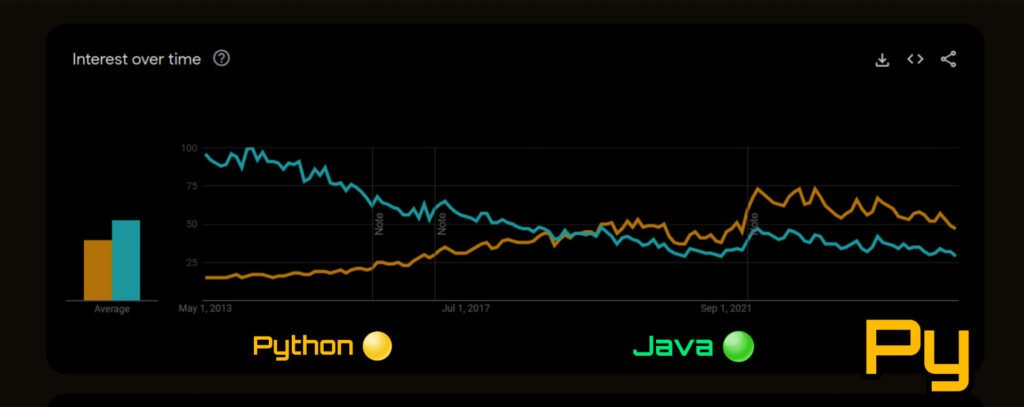
Short answer: Python appears to be on stronger upward momentum in many data-driven domains, while Java remains solid but with slower growth in some segments.
Evidence and numbers
- The Python salary guide I mentioned earlier shows mid-level Python devs average ~US $122,000 in 2025, up from lower numbers in earlier years. bluelight.co
- According to VentureBeat, Python averages around US $125,740 / yr in the US, with entry at ~$105,200 and experienced ~$157,600. Venturebeat
- On the Java front, the same source lists experienced Java roles in the US between ~$117,000 and ~$150,000 / yr. Venturebeat
- However, a survey from eFinancialCareers reports that salary averages for Python, Java and C++ engineers globally dropped more than 13% in one year—highlighting risk of slicing data too broadly. efinancialcareers.com
What this tells us
- Python’s growth is stronger in domains tied to ML/automation/data.
- Java remains stable but may see less explosive growth unless tied to cutting-edge domains.
- Salary trends are less about the language and more about how that language is applied.
- Because you are targeting business-tool creation and ML, the trend suggests Python is more aligned with “rising pay + rising business demand”.
My take
If I were you, I’d position myself as someone who leverages Python (and machine learning/data work) to capture the rising trend, while keeping Java as a secondary strength (especially for enterprise integration). That dual-capability puts you in a rare spot: you cover the “business automation/data tool” side AND you can bridge to “enterprise backend” when needed. That breadth can boost your value (and thus your salary/charge rate).
What business domains or use-cases drive the highest salaries for each language?
Short answer: For Python, data, ML, automation, analytics drive top pay. For Java, large-scale enterprise/back-end, high-concurrency systems, Android/microservices lead. But the business-problem context makes the difference.
Domains for Python
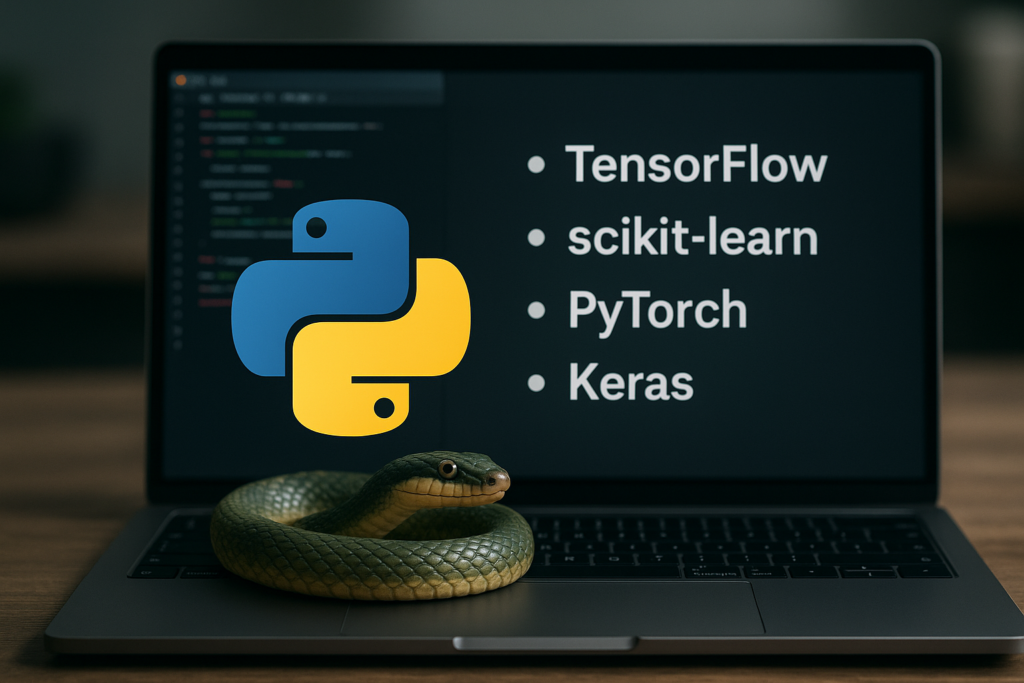
- Machine learning/AI: Thanks to libraries like TensorFlow, PyTorch, Python is the de-facto language in many data-led businesses.
- Data analytics & automation tools: Businesses that want to reduce cost, automate decision making, build tool-chains often pick Python. The salary guide I cited mentions the “talent pool is smaller” for Python which supports higher pay. bluelight.co
- Startups and innovation-led companies: They favour speed, prototyping, and Python is effective there.
Domains for Java
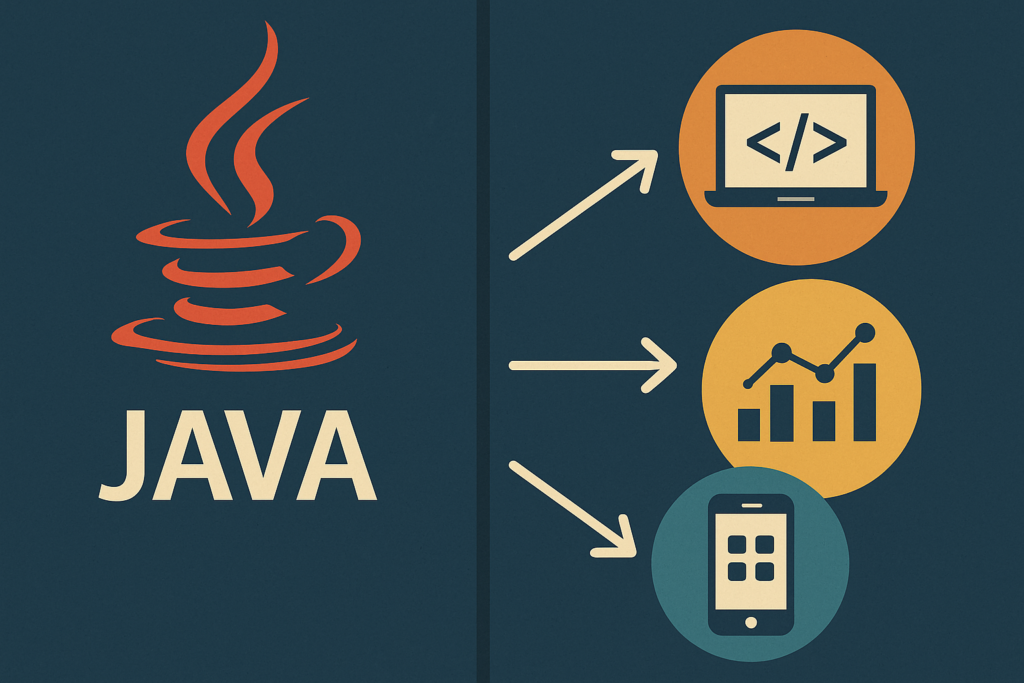
- Enterprise systems (finance, banking, insurance): These sectors still run on Java, and value scale, security, stability.
- Backend architectures, microservices: Java’s ecosystem (e.g., Spring Boot) is mature and used for large-scale systems.
- Android development: While Kotlin has grown, Java still has a hefty presence.
My reflection
When I’ve worked behind the scenes on automation tools, I found this pattern: the clients didn’t care what language I used—they cared what I delivered. So when you blog or build your positioning, frame your capability as “I solve business problems using Python/Java”, rather than “I am a Python dev” or “I am a Java dev.” That shift in narrative aligns you more with the high-pay business audience.
How do location, company size and remote work impact Java vs Python salaries?
Short answer: Location, company size and remote status can swing your salary by 10-30% or more, and the effect differs for Java and Python roles.
Location matters
- US tech hubs (e.g., San Francisco, New York) generally pay higher. For example, global data shows mid-level US Python devs average ~$117K-$160K depending on source. Venturebeat+3bluelight.co+3Qubit Labs+3
- Remote salaries vary: average remote developer salary in North America was ~$82,757 per year. Arc
- For enterprise Java roles, location also correlates with legacy systems cost + company budget. E.g., experienced Java devs in the US can earn $117K-$150K. Venturebeat+1
Company size and type
- Large enterprise/legacy systems: Often Java roles with bigger budgets, global scale, multiple teams. If you target these, Java salary can be strong.
- Startups/innovation/data-driven firms: More likely to use Python, rapid prototyping, ML/data work. If you’re tool-creator/freelancer, these are the domains you’ll want.
- In remote/contract world, smaller companies may pay less base salary but more flexible terms; larger ones may pay more but expect full-time commitment.
Remote vs on-site
- Remote work can blur location premium: some companies still pay based on location (e.g., US coastal salary levels); others adjust for cost of living.
- As a business-tool builder (like you are), remote contracts give you leverage if you deliver high business value irrespective of language.
- I’ve noticed when I pitched tool-development (Python automation) remotely for US clients, I could quote near US-market rates even from Bangladesh—provided I framed value clearly.
Which language should you lean toward for maximum earning potential?
Short answer: Lean toward Python for business-tool & ML third-wave value, while keeping Java as a strategic complement.
Why Python fits you best
- You’re a CS student with ML ambition and tool-building interest: Python rules ML/data space. For example, average US Python developer salary in 2025 ~ US $124,404. bluelight.co
- If you write blog content on tools/frameworks (your niche via Pythonorp) for business-users, Python gives you credibility in automation/data.
- Freelance/contract side: business clients are willing to pay for “Python automation + analytics” not just language mastery. You’re uniquely positioned there.
Why you shouldn’t ignore Java
- Java gives you access to enterprise clients: large businesses still run on Java and have big budgets.
- If you can integrate a Python-ML solution into a Java backend, you become rare and thus valuable.
- For long-term career stability: having both languages opens more doors rather than narrowing you.

What are the salary-boosting skills and business-value factors (beyond just “knowing Java or Python”)?
Short answer: Skills that tie your work to business outcomes matter more than the language itself.
Key business-value boosters
- Domain expertise: Know an industry (finance, supply-chain, SaaS) inside-out. If you bring domain + code, you’re double-valuable.
- Framework/library mastery
- Python: TensorFlow, PyTorch, Pandas, Airflow, Kubernetes for MLOps.
- Java: Spring Boot, Microservices, Kafka, high-scale distributed systems.
- Full-solution thinking: You can deliver code and craft tooling, user flows, deployment, business process. This raises the ceiling.
- Freelance/business mindset: You communicate in business terms (“I’ll reduce cost by X”, “increase speed by Y”), not just technical terms. That lets you charge higher.
- Remote/cross-time-zone discipline: As you’ll often work behind the scenes, being reliable, version-control disciplined, and good at async communication adds significant value.
One trap I’ve seen: developers focus on “language buzz” (learning Python because it’s hot) without linking it to business value. That limits income growth. Shift your story from “I know Python/Java” to “I use Python/Java to solve business problems and generate value”. That shift is what steps up salary.