Let’s be honest — if you’ve ever searched “Python vs Java”, you probably got lost in endless syntax comparisons. 💤
But here’s the thing most blogs miss: the real question isn’t which language is “better”… it’s which one fits you.
💡 Fact: According to the 2025 Stack Overflow Developer Survey, over 57% of developers use Python, while 45% still rely on Java in production systems. That means almost everyone serious about coding ends up touching one — or both.
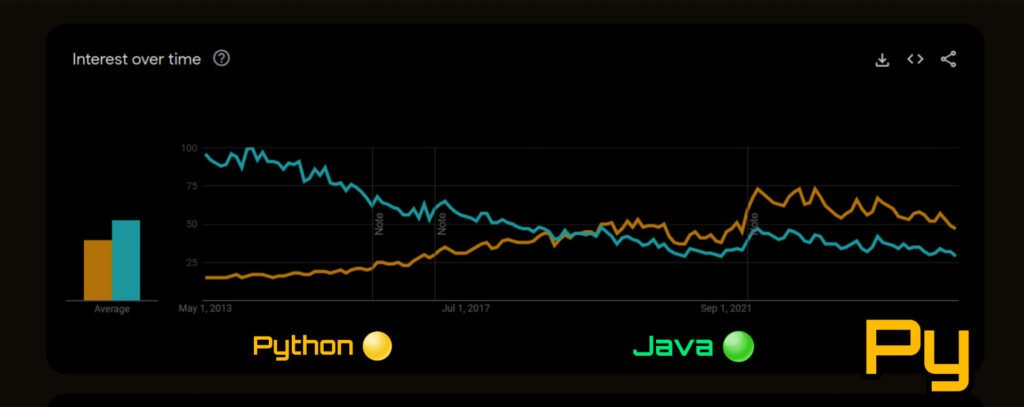
And that’s exactly what this post will help you figure out — not just what each language is, but what each language means for your career, mindset, and future projects.
I remember when I first started coding, I spent weeks bouncing between Python and Java tutorials.
Python felt like magic — I could automate, analyze, and build with almost no setup.
Java, on the other hand, felt strict but strangely satisfying — like building a skyscraper with precise blueprints.
If that sounds familiar, keep reading.
By the end of this post, you’ll know exactly which one matches your goals, your work style, and the kind of developer you want to become.
- Why Do Developers Keep Comparing Python and Java Even in 2025?
- What Core Differences Define Python and Java?
- How Does Performance Really Compare Between Python and Java?
- Which Language Is Easier to Learn and Maintain?
- What About Job Demand and Future Opportunities?
- How Do Libraries and Ecosystems Compare?
- Which Language Is More Suitable for Specific Goals?
- Which One Is Evolving Faster?
- What Do Developers Themselves Say?
- So… Which One Should You Choose in 2025?
- FAQs – Quick Answers
Why Do Developers Keep Comparing Python and Java Even in 2025?
Because they represent two different ways of thinking.
- Python is the artist’s tool — flexible, quick, expressive.
- Java is the engineer’s toolkit — structured, precise, and built for the long haul.
Even with AI reshaping everything, both remain essential. Python dominates data, AI, and automation, while Java powers enterprise systems, Android apps, and backend frameworks that quietly run the internet.
This comparison isn’t about syntax wars anymore. It’s about finding your fit in a world where coding is no longer just about logic — it’s about speed, scale, and sustainability.
What Core Differences Define Python and Java?
At their core, Python and Java were born from different philosophies.
How do their design philosophies differ?
- Python: Dynamically typed, interpreted, and designed for readability. You write less and see results faster.
- Java: Statically typed, compiled, and focused on reliability. You write more upfront, but your program behaves predictably.
What does that mean for real-world coding?
In Python, you can move fast — ideal for startups, experiments, and automation. But flexibility comes at the cost of runtime surprises (like type errors you only see mid-execution).
In Java, your code demands more setup but saves you headaches later. Once compiled, it’s rock solid and consistent, even across large teams.
| Feature | Python | Java |
|---|---|---|
| Typing | Dynamic | Static |
| Compilation | Interpreted | Compiled (JVM) |
| Syntax | Simple, English-like | Verbose but structured |
| Performance | Slower | Faster |
| Primary Use | AI, scripting, web | Enterprise, Android |
| Learning Curve | Easy | Moderate |
👉 Quick takeaway: Python prioritizes speed of development. Java prioritizes long-term stability.
How Does Performance Really Compare Between Python and Java?
Java is faster. That’s a fact.
Because it’s compiled to bytecode and runs on the Java Virtual Machine (JVM), it executes closer to machine code.
Python, being interpreted, adds an extra layer of translation — which makes it slower.
But here’s the twist: Speed rarely matters unless you’re building performance-critical systems (like games, trading engines, or analytics tools).
For 90% of use cases — data pipelines, AI models, APIs — Python’s library ecosystem and development speed easily outweigh raw performance differences.
If milliseconds matter — go Java.
If time-to-market matters — go Python.
Which Language Is Easier to Learn and Maintain?
Python wins hands down for beginners.
Its syntax reads like plain English. For example:
print("Hello, World!")
vs
public class Main {
  public static void main(String[] args) {
    System.out.println("Hello, World!");
  }
}
Why is Python easier to start with?
- No type declarations or semicolons.
- You can see results instantly.
- Massive beginner community and free resources.
Why do companies still choose Java for large projects?
Because strict structure = fewer surprises.
Static typing helps detect bugs early. IDEs (like IntelliJ or Eclipse) give deep code analysis, refactoring tools, and better long-term maintainability.
Hidden cost of Python’s simplicity
In big projects, Python can get messy fast if you don’t follow consistent standards. You’ll often see the phrase: “Python lets you shoot yourself in the foot faster.” 😅
What About Job Demand and Future Opportunities?
Let’s talk careers — because that’s what most readers care about.
Where Python shines
- Data Science, AI, and ML (TensorFlow, PyTorch, pandas)
- Web Automation and Scripting
- Backend Web (Flask, Django)
- Startups and SaaS
Where Java still dominates
- Banking and Enterprise Software
- Cloud Infrastructure
- Android Development
- Big corporations (where legacy systems rule)
Who earns more in 2025?
According to the Stack Overflow Developer Survey 2025, the average salary for Python developers is around $96,000, while Java developers average $92,000 globally.
But salaries vary by domain — AI engineers (Python) often earn more than enterprise backend developers (Java).
| Role | Language | Avg. Salary (USD) |
|---|---|---|
| Data Scientist | Python | $110,000 |
| Backend Engineer | Java | $95,000 |
| Automation Developer | Python | $85,000 |
| Android Developer | Java | $90,000 |
Bottom line: Python leads in new-age fields. Java rules legacy enterprise stacks.
How Do Libraries and Ecosystems Compare?
Both have massive ecosystems, but they serve very different audiences.
Python’s ecosystem
Python’s strength is in AI, ML, and data.
- NumPy, Pandas, TensorFlow, PyTorch, Flask
- Simple APIs, fast prototyping, and community-driven updates.
If your goal is innovation, Python wins.
Java’s ecosystem
Java’s ecosystem screams stability and scalability.
- Spring Boot, Hibernate, Jakarta EE, Maven
- Enterprise frameworks with decades of optimization.
If your goal is longevity and reliability, Java wins.
Which saves more time in the long run?
Python saves time in development.
Java saves time in maintenance.
Which Language Is More Suitable for Specific Goals?
Here’s the practical way to decide:
| Goal | Best Language | Why |
|---|---|---|
| Rapid Prototyping | Python | Simple syntax, fewer lines, faster iteration |
| Scalable Enterprise Apps | Java | JVM optimization and strict type system |
| AI/ML Projects | Python | Dominant ecosystem |
| Android Apps | Java | Native ecosystem |
| Automation & Scripting | Python | Lightweight and quick to run |
Key takeaway: Pick Python when your ideas need fast execution. Pick Java when your system needs to live for years.
Which One Is Evolving Faster?
Python’s growth
Python’s updates (like 3.12) brought faster runtimes and better memory efficiency. Tools like PyPy and Cython make Python execution closer to compiled speed.
Java’s modernization
Java isn’t stuck in the 2000s anymore. JDK 21 introduced pattern matching, virtual threads, and modularization — all improving scalability and speed.
Who’s adapting faster to AI-driven workflows?
Python clearly leads because of its integration with AI tools. But Java is catching up fast in cloud-native and high-performance microservices.
So while Python is the face of innovation, Java is quietly evolving behind the scenes — becoming leaner, faster, and more cloud-ready.
What Do Developers Themselves Say?
I’ve seen this debate play out on countless forums, from Reddit to Stack Overflow.
The most relatable quote I’ve ever read was:
“Python feels like art. Java feels like architecture.”
And that’s it. Python gives you creative freedom; Java gives you control.
From my experience — if you like experimenting and seeing results quickly, go Python. If you love designing systems that scale and run forever, go Java.
💡 Did You Know?
- Over 70% of AI research codebases are written in Python.
- But over 90% of Fortune 500 backends still rely on Java.
- Python has fewer lines of code per project but 3x higher code churn in teams (meaning it evolves faster!).
So… Which One Should You Choose in 2025?
Here’s the honest answer:
- If you’re a beginner: Start with Python.
- If you love structure and scaling systems: Go for Java.
- If you’re into AI or automation: Python is your playground.
- If you’re into enterprise or Android apps: Java still rules.
(Add Visual: “Decision Flowchart — Which Language Should You Choose?”)
Ultimately, don’t pick a side. Pick a path.
Both languages can make you a great developer — it’s your purpose, not your syntax, that matters most.
FAQs – Quick Answers
Q1. Which is better for beginners — Python or Java?
Python. It’s easier to read, write, and debug.
Q2. Is Python replacing Java?
Not at all. Python is growing in new domains; Java still dominates enterprise systems.
Q3. Can I learn both together?
Yes, and you should. They complement each other — one for innovation, one for scale.
Q4. Which is better for AI or ML?
Python, because of libraries like TensorFlow and PyTorch.
Q5. Which one should I learn first in 2025?
If you’re new to coding, Python. If you’re aiming for corporate software jobs, Java.
Q6. Is Java still worth learning?
Absolutely. Most enterprise systems, banks, and large applications still depend on Java.
Final Thought
It’s not Python vs Java. It’s Python for creativity and Java for reliability.
In 2025, knowing why you’re learning a language matters more than which one you choose.
Both are here to stay. The smarter question isn’t “Which is better?” —
It’s “Which one helps me build what I want next?” 🚀